Reported by Dipa Kuikel and Sirjana Waiba
One of Rukmini Foundation's goals for 2026 was to have a lunch program started or in the works in every partner school. This August, we achieved this goal.
Two important things happened. First, Ward No. 9 signed an agreement to support the program. Second, our team visited schools to see the program in action and talk to students.
Ward No. 9 Takes Responsibility
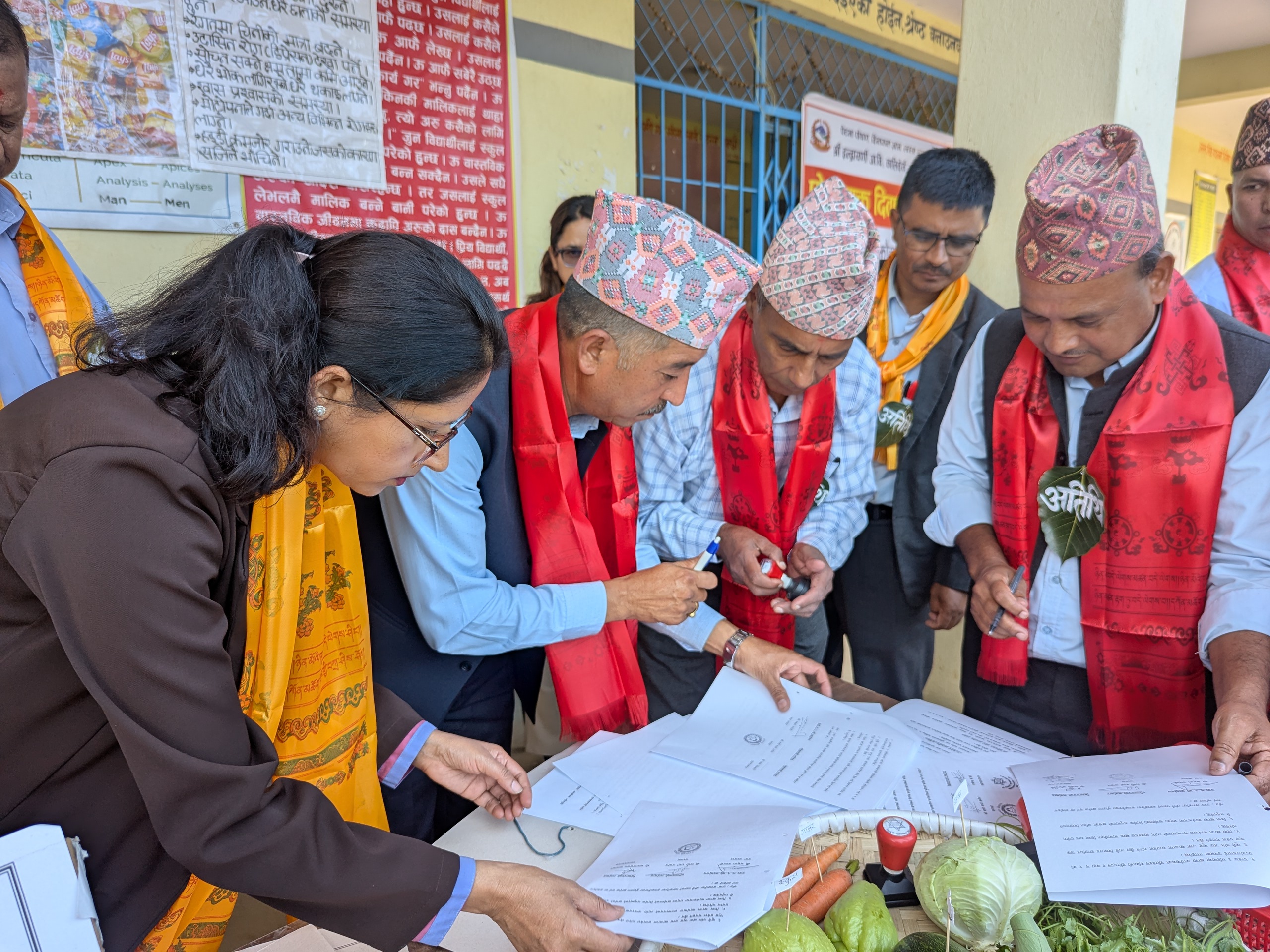
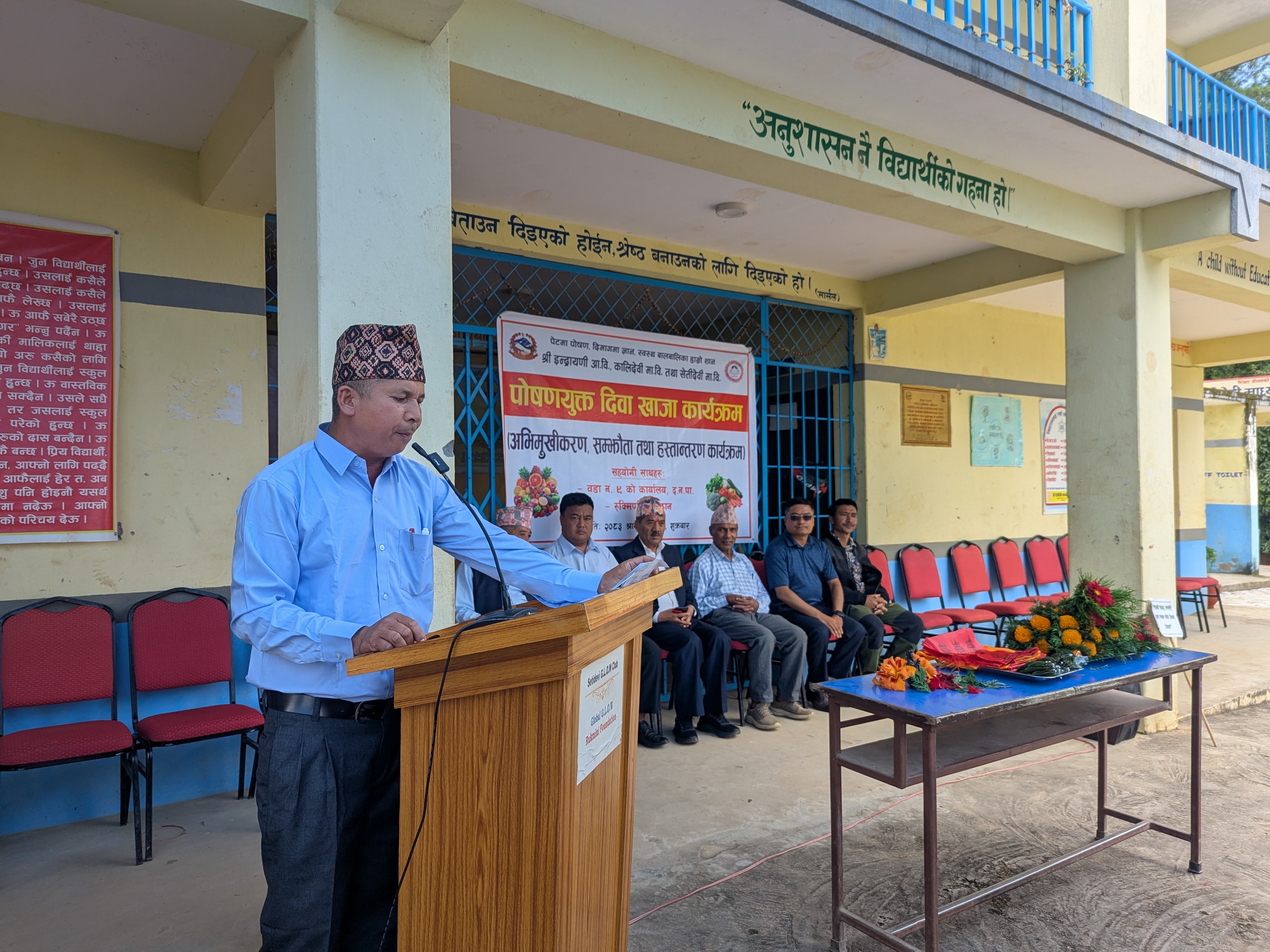
On August 7, we organized the Ward Level Nutritious Day Meal Program Orientation, Agreement Signing, and Handover Program. It was held at Setidevi Secondary School in Talku, Ward No. 9, Dakshinkali Municipality.
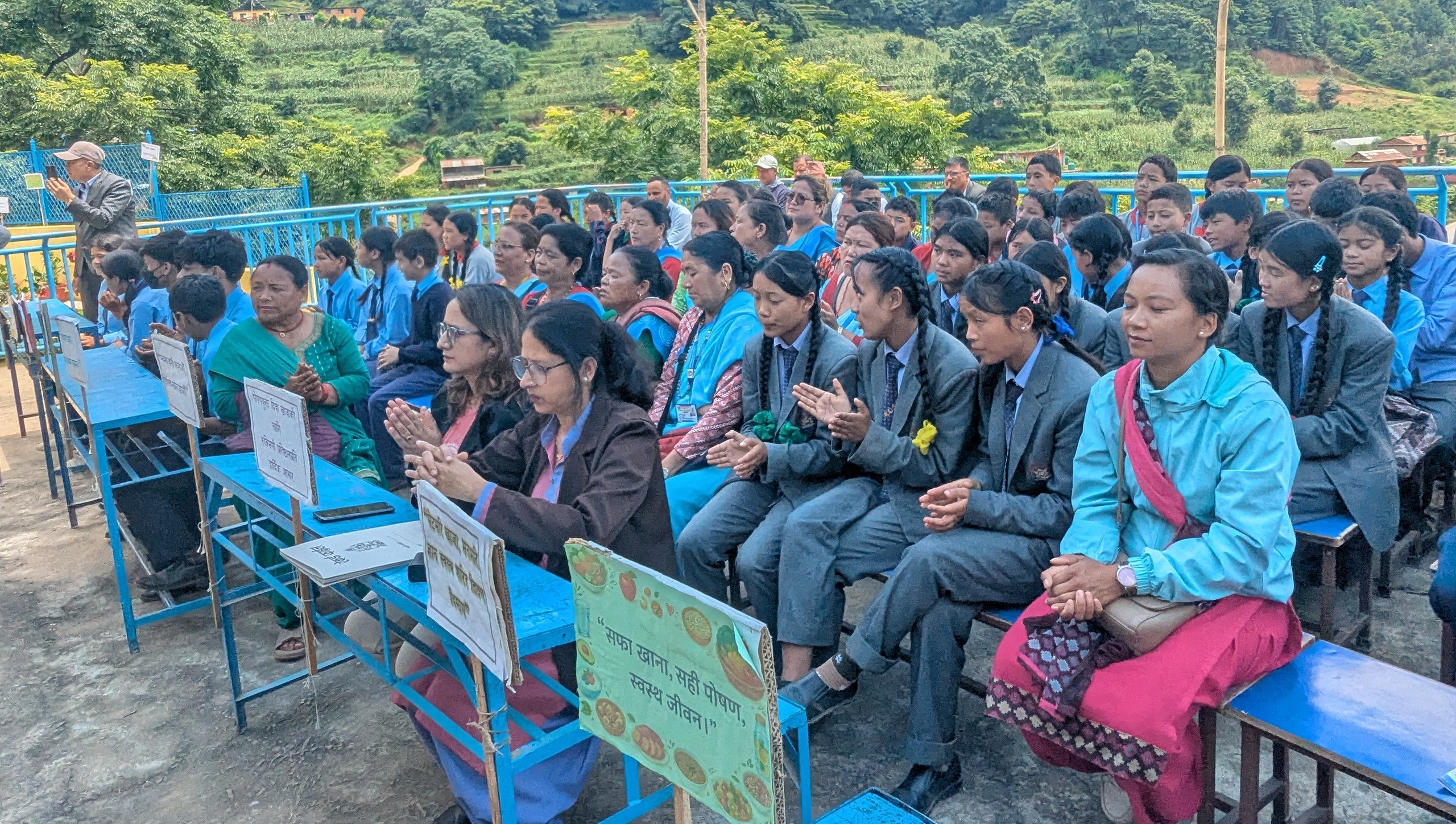
Many people attended. The Mayor and Deputy Mayor of Dakshinkali Municipality came. Representatives from the Health Section, the Ward Chairperson, and ward representatives were there. Chairpersons of School Management Committees, principals, teachers, and students from three schools also joined. The schools were Setidevi Secondary School, Kalidevi Secondary School, and Indrayani Basic School. Female Community Health Volunteers and Rukmini Pratisthan staff were also present.
The main outcome was that Ward No. 9 agreed to take ownership of the day meal program. The ward will contribute NPR 10 per student. This makes Ward No. 9 the third ward in Dakshinkali Municipality to support nutritious meals in government schools. Wards No. 8 and 3 had already made similar commitments.
This is important for sustainability. When local government takes ownership, the program can continue and grow.
Why This Program Matters
The Government of Nepal provides free day meals to students from Grades 1 to 5 in government schools. But students from Grades 6 to 10 are not included.
Rukmini Pratisthan supports nutritious day meals in schools to fill this gap. The goal is to help students get better nutrition and learn better.
During the August 7 program, Dhananjaya, Head of Talku Health Post, led a session on junk food. He talked about how junk food affects health. He also shared ways to reduce junk food and make healthier food choices.
This was also the first time Rukmini Pratisthan supported the day meal program at Indrayani Basic School. This means we are reaching more students in the municipality.
Objectives of the Program
The program was designed with these objectives:
-
To encourage the ward to take ownership of the day meal program and provide additional support to schools
-
To contribute to the sustainability of the nutritious day meal program
-
To work towards making all schools in Dakshinkali Municipality have access to nutritious day meals
-
To raise awareness among students about the health impacts of junk food
-
To promote improved nutrition, health, school attendance, and learning
-
To strengthen collaboration among the municipality, ward, schools, and Rukmini Pratisthan
School Visits
On August 19 and 20, our team visited four schools. We visited Ganesh Basic School, Champadevi Basic School, Balsudhar Basic School, and Arunodaya Secondary School. These schools are in Bhanjyang, Bosan, Bansbari, and Satikhel.
We wanted to see how the program is working. We observed meal preparation and distribution, hygiene practices, food preferences, meal schedules, and how students respond to the program.
Champadevi Basic School
At Champadevi Basic School, we met Mr. Rudra Prasad Adhikari. He is the new school principal. Rukmini Didi Sabina introduced the Day Meal Program and explained its purpose to him.
We watched the meal distribution. Teachers monitored students' hygiene. They encouraged students to wash their hands with soap before eating. Students received their meals in an organized queue. Senior students helped younger children maintain discipline.
The visit was on a Wednesday. The meal was rice, lentil soup (dal), and soybean curry. Many students said they enjoy dal bhat. The school provides different food items throughout the week. They also serve sweet pudding on some days. The variety helps make the program enjoyable for students.
Ganesh Basic School
At Ganesh Basic School, we met the principal. He shared that about 66 students are studying at the school. The number changes because many families migrate for work.
The principal said many students come from low income and migrant families. For these children, the Day Meal Program is very important. It provides nutritious food during the school day. It also encourages them to attend school regularly.
We observed students taking their meals in an orderly queue. During the meal break, students played games like rock paper scissors. The environment was joyful and social.
The Day Meal Program is not only providing food. It is also giving children a chance to enjoy their school day, interact with friends, and stay active.
Balsudhar Basic School
We also visited Balsudhar Basic School. We had a short discussion with the teachers about the Day Meal Program. We observed students receiving and eating their meals.
Students were given nutritious food like rice and beans. After eating, students participated in physical activities and games. They played badminton and skipping. The students were energetic and enthusiastic. This shows that food supports physical activity, concentration, and the school experience.
The weekly meal schedule at Balsudhar Basic School:
-
Sunday: Dal, rice, and vegetables
-
Monday: Beaten rice (Chiura) and vegetables
-
Tuesday: Halwa (sweet pudding) and vegetables
-
Wednesday: Mixed beans (Kwanti) and rice
-
Thursday: Chamre and vegetables
-
Friday: Rice porridge (Jaulo) or beaten rice with yogurt (Dahi Chiura)
The school tries to provide different food throughout the week. They do not serve the same meal every day.
Arunodaya Secondary School
We visited Arunodaya Secondary School and met with the principal. He shared that about 200 students receive meals every day. Teachers also eat the same food as students.
The school has observed that students enjoy fried rice and halwa. The school considers students' preferences when planning the menu. For example, students do not like Puwa. So the school is thinking about replacing it with rice, vegetables, and lentil soup.
The visit was on a Thursday. Students were eating beaten rice (Chiura) and vegetables. Students said they enjoy fried rice and halwa. They also said that receiving meals at school helps their families save money on food.
The weekly meal schedule at Arunodaya Secondary School:
-
Monday: Poha
-
Tuesday: Fried rice
-
Wednesday: Chickpeas and bread
-
Thursday: Beaten rice (Chiura) and vegetables
-
Friday: Halwa and potatoes
What We Learned
The school visits showed several positive results.
Students get nutritious food. The program provides regular meals during school hours. This helps children from low income and migrant families who may not always have access to nutritious food.
Students attend school more regularly. School representatives said the meal program encourages students to come to school. For some families, the meal at school also provides economic support.
Students practice better hygiene. The program helps reinforce healthy habits. Teachers monitor students and encourage them to wash their hands with soap before eating.
Students have more energy. After eating, students participated in games and physical activities like badminton and skipping. This shows that food supports their energy and participation at school.
Students share their food preferences. Students openly shared what food they like. Schools are listening to these preferences while also trying to keep menus nutritious. This can help increase students' acceptance of meals and reduce food waste.
Students enjoy meal time together. Meal time gives students a chance to sit together, interact, and enjoy time with friends. The program helps create a positive and inclusive school environment.
The Impact
The Day Meal Program is making a difference in students' daily school experience. For children from poor families, a school meal reduces the burden on parents. It also makes sure children get food during the school day.
The program also helps with regular attendance, active participation, better hygiene, and students' well being. The children themselves appreciate the meals. They show enthusiasm during meal times and activities.
The program is not just about feeding children. It is an investment in their health, education, dignity, and future.
Recommendations
Based on what we observed, we suggest the following:
-
Continue providing different nutritious meals that include carbohydrates, protein, vegetables, pulses, and local foods.
-
Consider students' preferences when planning menus while keeping nutrition a priority.
-
Continue monitoring handwashing with soap before meals.
-
Reduce food waste by collecting feedback from students about meals they like and do not like.
Looking Ahead
The Day Meal Program in Dakshinkali Municipality is providing more than a meal. It is supporting children's nutrition, encouraging regular school attendance, promoting hygiene, and creating a happier and more active learning environment.
The visits to Champadevi Basic School, Ganesh Basic School, Balsudhar Basic School, and Arunodaya Secondary School showed that the program is especially valuable for children from poor and migrant families. Students were eating together, playing games, and sharing their preferences about meals.
With Ward No. 9 now supporting the program, and with every partner school having a lunch program started or in the works, we have achieved our 2026 goal. But the work continues. We will keep listening to students, improving menus, and strengthening partnerships. Every child should have access to a nutritious meal during the school day.
A nutritious meal today can help build a healthier, more confident, and better educated child tomorrow.
Thank You to Our Partners and Donors
This work is possible because of our partners and donors.
We want to thank AllPeopleBeHappy for their support of the Day Meal Program. Their partnership helps us reach more children and schools.
We also thank all our donors and supporters. Your generosity makes this work possible. You are helping us build a healthier and stronger future for children in Nepal.
How You Can Help
We want to continue this impact in the coming years. With your support, we can reach more schools and more children.
You can help by donating, sharing our work with others, or partnering with us. Every contribution makes a difference.
Together, we can ensure every child has a nutritious meal at school. Together, we can help children learn, grow, and succeed.
To support our work, please consider making a donation.
Reported by Dipa Kuikel and Sirjana Waiba

- Community Ownership Brings Nutritious Meals to Every Partner School - September 22, 2026
- When a Didi’s Story Becomes Our Lesson - June 29, 2026
- What 33 Boys Taught Me About Breaking the Silence - June 29, 2026
- Protecting Our Mothers, Sisters, and Daughters - June 29, 2026
- A Mentor’s Joy: Watching a Leader Bloom in Our GLOW Club - November 27, 2025