
By the Rukmini Foundation Team
April 10–12, 2026 | Chhaimale, Dakshinkali Municipality
In the hills of Dakshinkali Municipality, every season brings a quiet heartbreak. Families grow beautiful vegetables—tomatoes, radish, leafy greens, taro, beans, squash, cauliflower, carrots. They sell what they can at the local market. But a significant amount always remains. And without proper preservation skills, that leftover produce ends up in the compost pile. Or simply rots.
Meanwhile, the school day‑meal programs we support struggle to afford nutritious vegetables during the dry season, when prices climb and quality drops.
For years, we saw these two problems as separate. Then, with the support of our partners, we realized: they are the same problem.
The solution? Train mothers and school cooks to preserve surplus vegetables into pickles, gundruk, sinki, and masyaura. Less waste. Better nutrition. New income.
That idea became a 3‑day hands‑on training on April 10–12, 2026, in Chhaimale (Dakshinkali Municipality Ward‑8). And we could not have done it without the generous support of AllPeopleBeHappy.
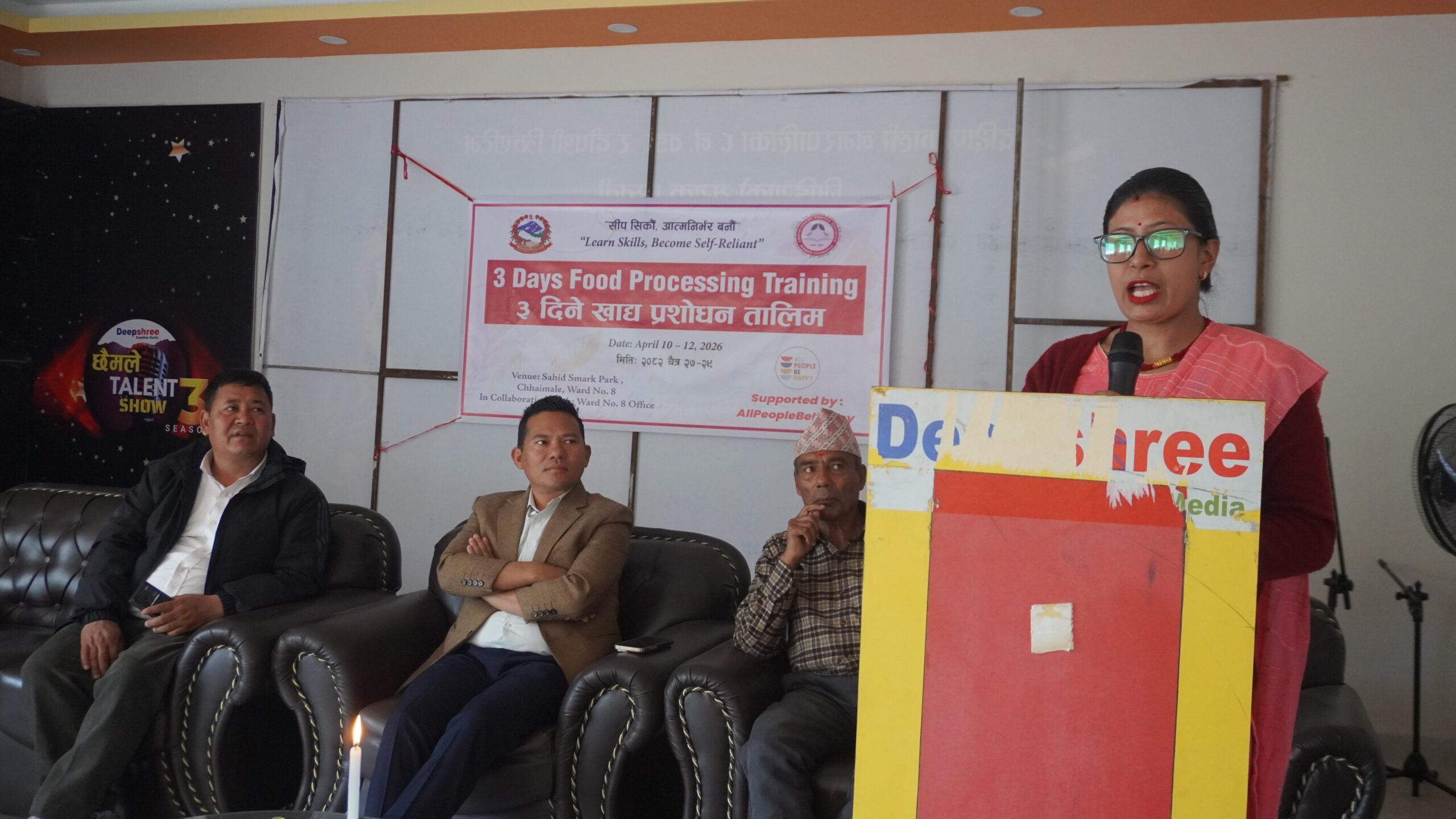
A Community Comes Together
41 people participated—mostly mothers of students enrolled in our partner schools, along with the cooks (both women and men) who run those school kitchens every single day.
We designed the training for women's economic empowerment, but including the cooks made practical sense. They prepare the meals. They know what children will actually eat. Rukmini Foundation believes in reaching everyone who can create change.
The first day began with quiet words from the Ward Chairperson, the School Management Committee Head, and our own Chairperson. No long speeches. Just encouragement.
Then something small and deliberate happened.
Every participant received a handwritten name badge.
Most of these women were meeting for the first time. Within an hour, strangers were helping each other pin badges, calling each other by name, and sitting together. That simple act built trust before a single vegetable was sliced.
The Trainer Who Started in Her Kitchen
Our trainer was Gita Amatya, founder of Mangal Krishi Farm in Ward 6.
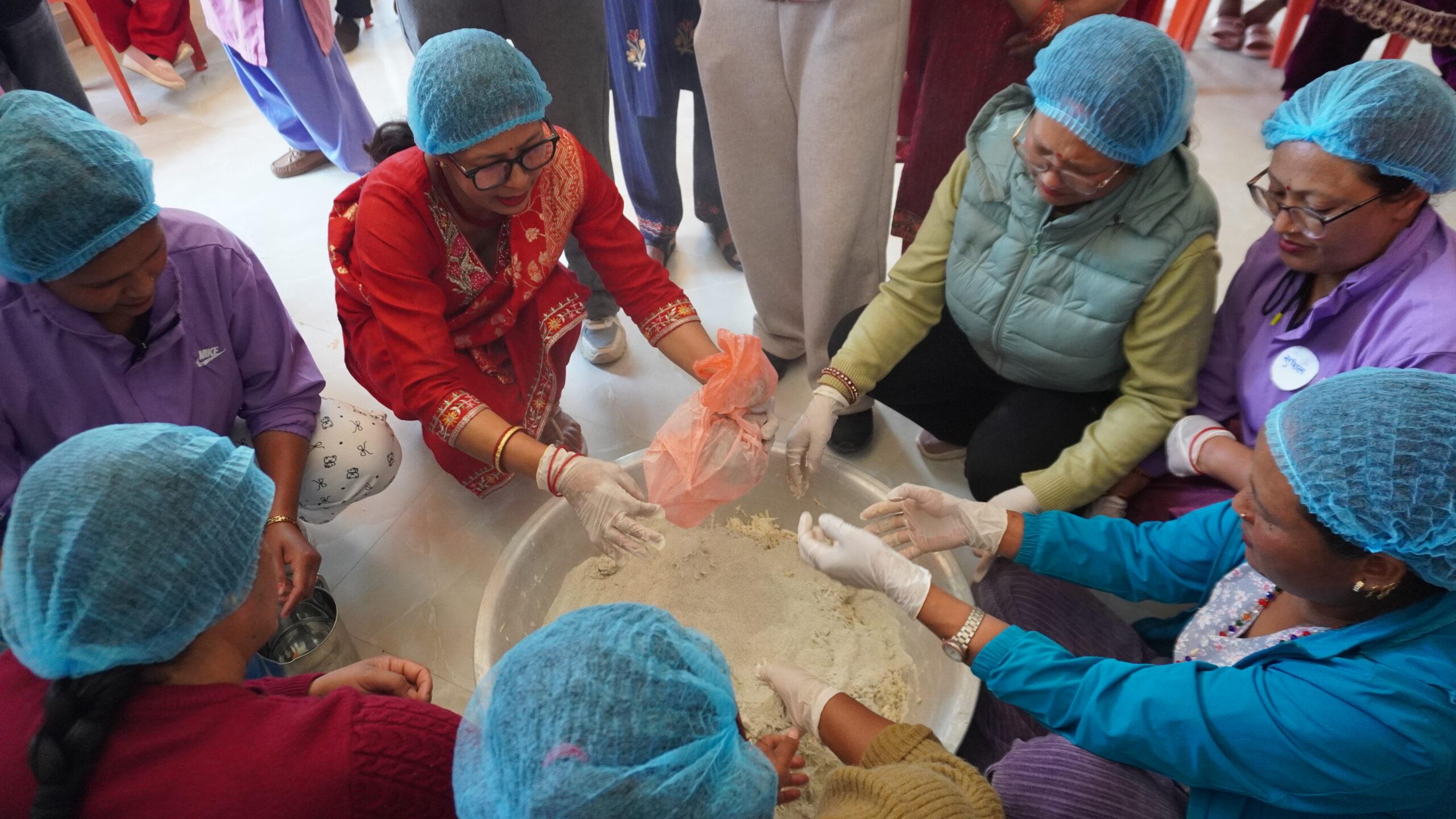
Gita is not a consultant flown in from Kathmandu. She is a local woman entrepreneur who built her business from her own kitchen. She taught hygiene as a habit (hairnets, gloves, sterile jars), spice ratios as a science, and packaging as a pathway to market.
Her message was practical and unforgettable:
"You don't need a factory. You need clean hands and confidence."
Over three days (six hours each), participants made:
-
Tomato pickle
-
Radish pickle
-
Fenugreek seed pickle
-
Masyaura (sun‑dried taro dumplings)
-
Gundruk (fermented leafy greens)
-
Sinki (fermented radish root)
They learned jar sterilization, oil tempering, slicing techniques. And everyone took home what they made.
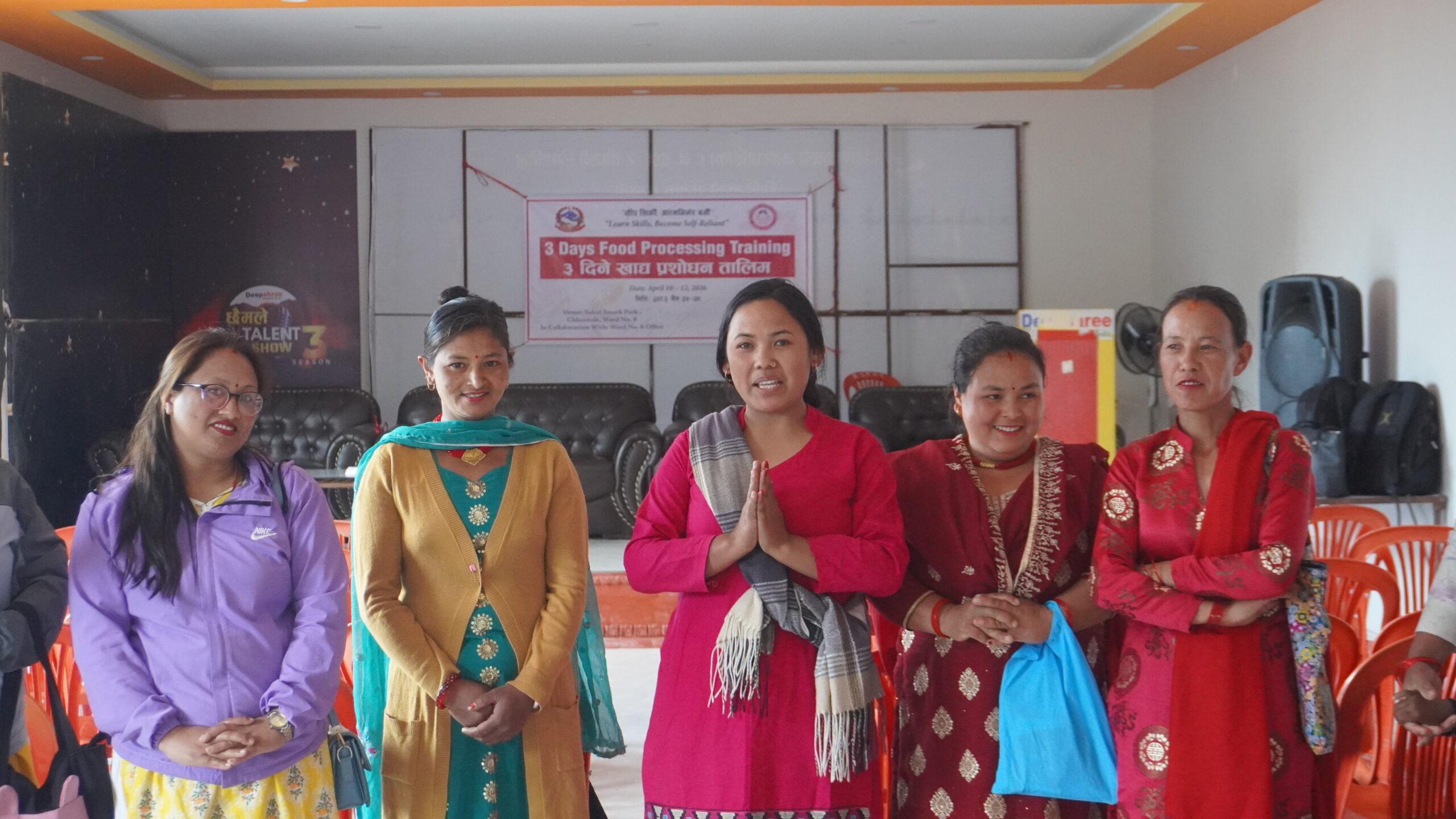
When Participants Became Teachers
On day two, Durga Bhulan—kitchen manager from Kalika Secondary School—brought a jar of fenugreek pickle she had made at home the night before.
It worked.
That small act of courage opened the door. Other participants brought their own pickles—family recipes handed down for generations, local ingredients, unique flavors. Women who came to learn became teachers. Their grandmothers' knowledge, which had never been written down, suddenly had value again.
On the final day, Durga stood up and said:
"Now we can earn money from vegetables that used to go to waste. I will share this recipe with my village and school staff. We have already started making these at home."
Then Gauthali Tamang—a woman who had been quiet for all three days—broke into an instant dohori folk song. About pickles. About gratitude. About the Rukmini Foundation.
The whole room clapped and sang.
How This Training Keeps Giving
On the last afternoon, participants formed small groups by ward and school. They planned:
-
What to make
-
Where to sell (local market, school kitchens, village shops)
-
How to support each other
Gita Amatya made a promise: she will buy their products for the stores where she already sells and help with market linkages.
The women also created a WhatsApp group—not just for recipes, but for encouragement. When one of them makes her first sale, the whole group will know.
The Impact (So Far)
-
Less waste – Surplus vegetables become pickles, not compost.
-
Better school nutrition – Schools can use homemade preserved foods year‑round, even in the dry season when fresh vegetables are expensive.
-
New income – A single jar of pickles sells for far more than its vegetables cost.
-
Stronger community – Strangers now share recipes, a business plan, and a folk song.
And this is just the beginning.
A Special Thank You to AllPeopleBeHappy
None of this happened without AllPeopleBeHappy. They believed in this idea when it was still just a conversation: What if we could train mothers to save vegetables, feed children, and earn money?
AllPeopleBeHappy said yes. And because of them, 41 women now have skills that will never rot. Jars are being filled. School meals will be better. And a room full of strangers sang together.
From all of us at Rukmini Foundation: Dhanyabad, AllPeopleBeHappy.
What Comes Next
We will conduct follow‑up visits to monitor progress. We will support school linkages and market connections wherever possible. And we will share more stories as these women start their first sales.
This training is a step toward women's economic empowerment—and we are committed to seeing it through. Once again, many thanks to our dear friends at AllPeopleBeHappy for seeing the potential of this program.
With gratitude, pickles, and a lot of hope,
The Rukmini Foundation Team
📸 See photos from the Pickle & Fermented Food Training: [Flickr Album]
🌐 Learn more or donate: www.rukminifoundation.org

- From Afraid to Ask to Ready to Try - September 22, 2026
- New Skills for a Changing Nepal - September 22, 2026
- Building Emotional Strength: Mental Health Awareness at Pharping - July 27, 2026
- Turning Trash into Treasure - June 29, 2026
- More Than Just a Cookbook - June 29, 2026