By Sirjana Waiba
May 2026 – Mother’s Day Month
“Menstruation is a completely natural biological process. Girls should never feel shy or embarrassed about it.”
— Kanchan Budathoki Basnet, Staff Nurse, Patan Hospital
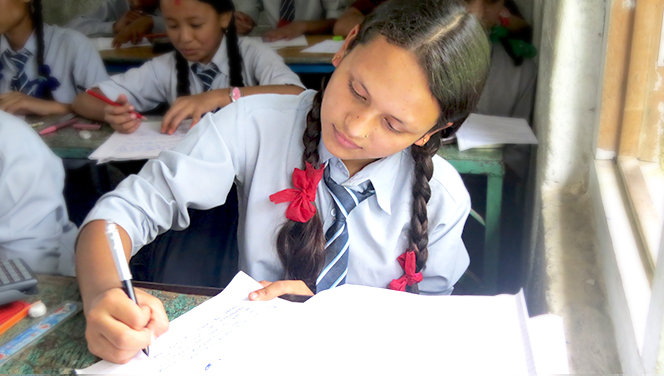
On May 20th, the Rukmini Foundation brought together 35 adolescent girls from grades 6, 7, and 8 at Setidevi Secondary School, Sokhel for a special Menstrual Hygiene Awareness Program. The theme was simple yet powerful: Care, Cleanliness, Confidence.
The session was led by Kanchan Budathoki Basnet, a staff nurse at Patan Hospital. But she did not arrive with sterile clinical language. She arrived as a big sister—and, in the spirit of May, a mother‑figure who wanted these girls to have the knowledge that many mothers never received.
Because here is the quiet truth: most of our Bahinis’ own mothers grew up in a time when periods were whispered about behind closed doors. They were told “don’t touch the pickle jar” and “don’t go to the temple.” Shame was passed down like an heirloom.
This Mother’s Day month, we decided to break that chain.

Why May 28th Matters (And Why We Started Early)
Kanchan Didi began by telling the girls about Menstrual Hygiene Day, celebrated every year on May 28th. The global theme for 2026 is “Together for a Period‑Friendly World.”
“But why wait until the 28th?” she asked. “Your body doesn’t wait. Your questions don’t wait. So we start today.”
That set the tone: no hesitation, no euphemisms. Just science, warmth, and honesty.
Puberty: The Change That No One Talks About Enough
The facilitator explained that puberty is the stage of physical and emotional development during adolescence. For girls, it usually begins between ages 9 and 14—exactly the age of the girls sitting in that room.
She listed the changes they were already noticing (or about to notice):
-
Breast and nipple development
-
Growth of body hair
-
Increase in body weight and body fat
-
Oily skin and pimples/acne
-
Body odor
-
Emotional changes and mood swings
-
The beginning of menstruation (menarche)
She also explained changes in boys (growth of penis and testes, voice changes, facial hair, etc.) so that the girls would understand that puberty is not something “wrong” with them—it is something everyone goes through.
“You can share anything with a trusted adult, a teacher, a health worker, or a family member. You are never alone.”
What Exactly Is a Menstrual Cycle?
Using a clear diagram (see photo in the full report), Kanchan Didi explained the menstrual cycle as a natural monthly hormonal process that prepares the body for a possible pregnancy. The average cycle lasts 21–35 days, with 28 days being common.
She broke it down into phases:
-
Menstrual Phase: The period itself, with symptoms like cramps, tiredness, irritation, mood swings, and breast tenderness.
-
Ovulation Phase: White discharge/mucus may appear.
-
Luteal Phase: Possible weight gain, mood changes, breast tenderness.
She emphasized: “Every body is different. Your cycle might not be exactly 28 days. That’s normal. But if something feels very wrong, you must speak up.”

Menstrual Hygiene: Small Habits, Big Protection
The core of the session was hygiene—because ignorance leads to infection, and infection leads to days lost from school.
Kanchan Didi introduced several menstrual products:
-
Sanitary pads
-
Tampons
-
Menstrual cups
-
Panty liners
-
Menstrual discs
-
Menstrual spoons (less common but mentioned for awareness)
Then she taught the girls best practices that every mother would want her daughter to know:
✅ Change pads every 4–6 hours (depending on flow).
✅ Wash hands before and after changing pads.
✅ Properly wrap and discard used pads (never flush).
✅ Clean the intimate area regularly.
✅ Drink plenty of water.
✅ Eat healthy, energy‑giving foods.
✅ Wear breathable cotton underwear.
✅ Track your cycle (a simple notebook or calendar is enough).
✅ Avoid scented products that can cause irritation.
✅ Do not ignore unusual symptoms (heavy bleeding, severe pain, foul smell).
“These are not just rules. These are how you stay in school, stay healthy, and stay confident.”
The Girls Asked Brave Questions (And That’s How Change Begins)
The most powerful part of the program was when the girls themselves started talking.
-
Bimala asked about the effects of junk food and the importance of healthy eating during periods.
-
Muskan shared her experience with emotional changes, stress, and why learning about menstrual hygiene matters for maturity.
-
Saurabhi wanted to know: “Should I take medicines during periods? When do I need to see a doctor?”
-
Others asked about irregular periods, hormonal imbalance, acne, excessive bleeding, and period pain.
None of these questions were met with embarrassment. Each one was answered with respect and medical accuracy.
Home Remedies That Actually Work
Kanchan Didi knows that not every family can afford painkillers or fancy products. So she shared home remedies that have been used safely for generations:
- Drinking warm water
- Cinnamon water (Daalchini pani)
- Ginger (Aduwa) tea or infusion
- Gentle oil massage on the lower abdomen
- Eating soup (especially broth‑based)
- Meditation and light breathing exercises
- Taking proper rest (no shame in lying down)
- Using a hot water bottle or warm compress
She also recommended nutrient‑rich foods during menstruation: pumpkin seeds, almonds, broccoli, soup, iron‑rich and protein‑rich foods, and—again—plenty of water.

What the Bahinis Learned (In Their Own Words)
At the end of the session, we asked the girls to share their takeaways. Here is what they said:
Ritu: “We learned about menstrual hygiene, healthy habits, stress management, and the importance of sharing problems openly.”
Krizna: “Menstruation should not be a matter of shame. If bleeding becomes excessive, girls should immediately visit a hospital. Also, change pads every 4–6 hours and wash hands before and after.”
Subani: “Drinking plenty of water is very important. If bleeding is too heavy, go to the hospital.”
Several girls also mentioned that they now feel confident to talk to their mothers about periods—and to correct misinformation gently.
A Small Gift, A Big Message
After the session, Rukmini didis distributed sanitary pads and sanitation tools—nail cutters, combs, and tooth floss. These were not just items. They were a message: You deserve to be clean, comfortable, and cared for.
In the spirit of Mother’s Day, we thought of every mother who never received such a kit, who managed her periods with rags and secrecy. This generation will be different.

Why This Program Matters (Especially in May)
May is the month we celebrate mothers. And what is motherhood without health? A mother who never learned about her own body cannot teach her daughter. A daughter who learns early becomes a mother who breaks cycles.
This single session at Setidevi Secondary School did not just inform 35 girls. It created 35 ambassadors who will go home and say: “Mummy, did you know we should change pads every 4 hours? Did you know cinnamon water helps with cramps?”
That is how a period‑friendly world begins—not with grand policies, but with one girl, one conversation, one moment of courage.
Looking Ahead
We are committed to holding more such awareness programs in other schools and communities. Because menstrual hygiene is not a luxury—it is a right.
If you would like to support our health and hygiene initiatives, including pad distribution and awareness sessions, please consider a donation today.
📸 See more photos from the session → Flickr Album.
💝 Donate to support girls’ health and education → Donate
With gratitude and hope,
The Rukmini Foundation Team

- “Care, Cleanliness, Confidence”: How 35 Bahinis Learned to Talk About Periods Without Shame - May 27, 2026
- From Compost to Commerce: How 41 Mothers Turned Surplus Vegetables into Pickles, Profit, and Pride - April 26, 2026
- Measuring Dreams & Stitching Confidence: A Didi’s Letter to You - April 26, 2026
- Sitting in the Circle with Our Big Sisters - March 28, 2026
- Cultivating Change: How Organic Farming at Kalika School is Helping Us Empower Girls - February 28, 2026